In today’s learning environments, safety is just as important as education. As schools and districts across the country invest in upgraded security measures, many are turning to technology for faster emergency response, and that shift starts with a strong infrastructure.
One driving force behind this change is Alyssa’s Law, a piece of legislation gaining traction in several states, including Maryland. The law requires public schools to implement silent panic alarm systems that connect directly to law enforcement.
But implementing these systems isn’t as simple as installing a new button on the wall. Behind every effective safety upgrade is a network of low-voltage cabling and connectivity, and failing to plan for that infrastructure can delay deployments, increase costs, or even render systems ineffective in a crisis.
Here’s what schools need to know about cabling when planning safety upgrades tied to Alyssa’s Law and other modern emergency response systems.
What Is Alyssa’s Law?
Named after Alyssa Alhadeff, a student who tragically lost her life in the 2018 Parkland school shooting, Alyssa’s Law requires schools to install silent panic alarms that can alert local law enforcement during emergencies. The goal is to reduce police response time and save lives.
Several states—including New Jersey, Florida, and Texas—have passed or proposed versions of the law. Maryland introduced legislation in recent years, and even in states where it hasn’t been adopted, many school districts are proactively moving forward with similar upgrades to enhance campus security.
Why Panic Alarms and Emergency Systems Depend on Cabling
Modern panic alert systems are part of a larger ecosystem of school safety technology that may include:
- Silent panic buttons (wired or wireless)
- Mass notification systems (PA and intercoms)
- Security cameras and video surveillance
- Door access control systems
- Visitor management systems
- Integrated mobile apps for staff alerts
These systems rely on low-voltage cabling to transmit data and power in real time, especially when seconds count. And in older school buildings or campuses that have grown over time, the existing cabling infrastructure may not be sufficient to support these technologies.
Top Cabling Considerations for School Safety Upgrades
If your school or district is evaluating safety upgrades, here are some important infrastructure questions to ask before selecting or deploying new systems:
1. Do You Have a Structured Cabling Backbone?
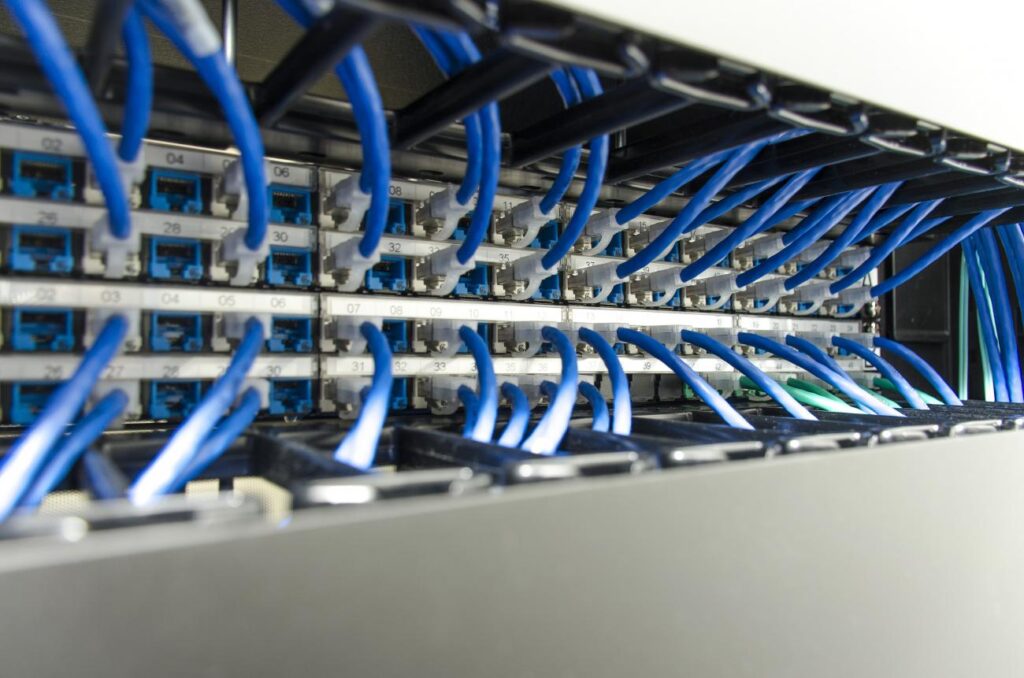
A structured cabling system creates a reliable and organized network that allows all your safety technologies to communicate with each other. This backbone is essential for managing access control, cameras, intercoms, and panic buttons in a scalable way.
2. Are Your Cable Runs Up to Date and Certified?
In many schools, existing Ethernet cables are outdated, damaged, or no longer meet current standards. A full site audit can reveal where upgrades are needed to support high-speed data transfer, Power over Ethernet (PoE), and new endpoints across campus.
3. Is Your Cabling Compatible With PoE Devices?
Many modern safety systems use PoE, allowing them to receive power and data through a single cable. This can simplify installations and reduce costs—but only if your existing cabling can handle the electrical load.
4. Do You Have Enough Network Drops in Critical Locations?
When planning safety upgrades, it’s not enough to cover the main office. Consider where network drops will be needed across the building—hallways, entrances, classrooms, gymnasiums, and portable classrooms. Planning these locations early will reduce installation delays and ensure full coverage.
Systcom’s Role in School Safety and Compliance
At Systcom, we understand the urgency and complexity of school safety initiatives. Our team works with school administrators, IT staff, and security system vendors to prepare the cabling infrastructure needed to support panic alarms, surveillance, intercoms, and other life-saving technologies.
We offer:
- Full site surveys and assessments of existing cabling
- Cabling layout and installation plans that meet safety and code requirements
- Structured cabling that supports voice, video, and data systems
- Experience working in occupied school buildings with minimal disruption
- Future-proofing for anticipated technology expansions
Whether you’re planning a phased implementation or a full-scale system upgrade, we’ll help you build a reliable foundation for faster emergency response and safer learning environments.
Is Your School’s Infrastructure Ready for Modern Safety Systems?
Technology is only as effective as the infrastructure behind it. If your school is considering Alyssa’s Law compliance or other safety enhancements, now is the time to assess whether your cabling can support them.
Contact Systcom today to schedule a consultation. We’ll help you plan a system that’s compliant, connected, and built to protect what matters most—your students and staff.